
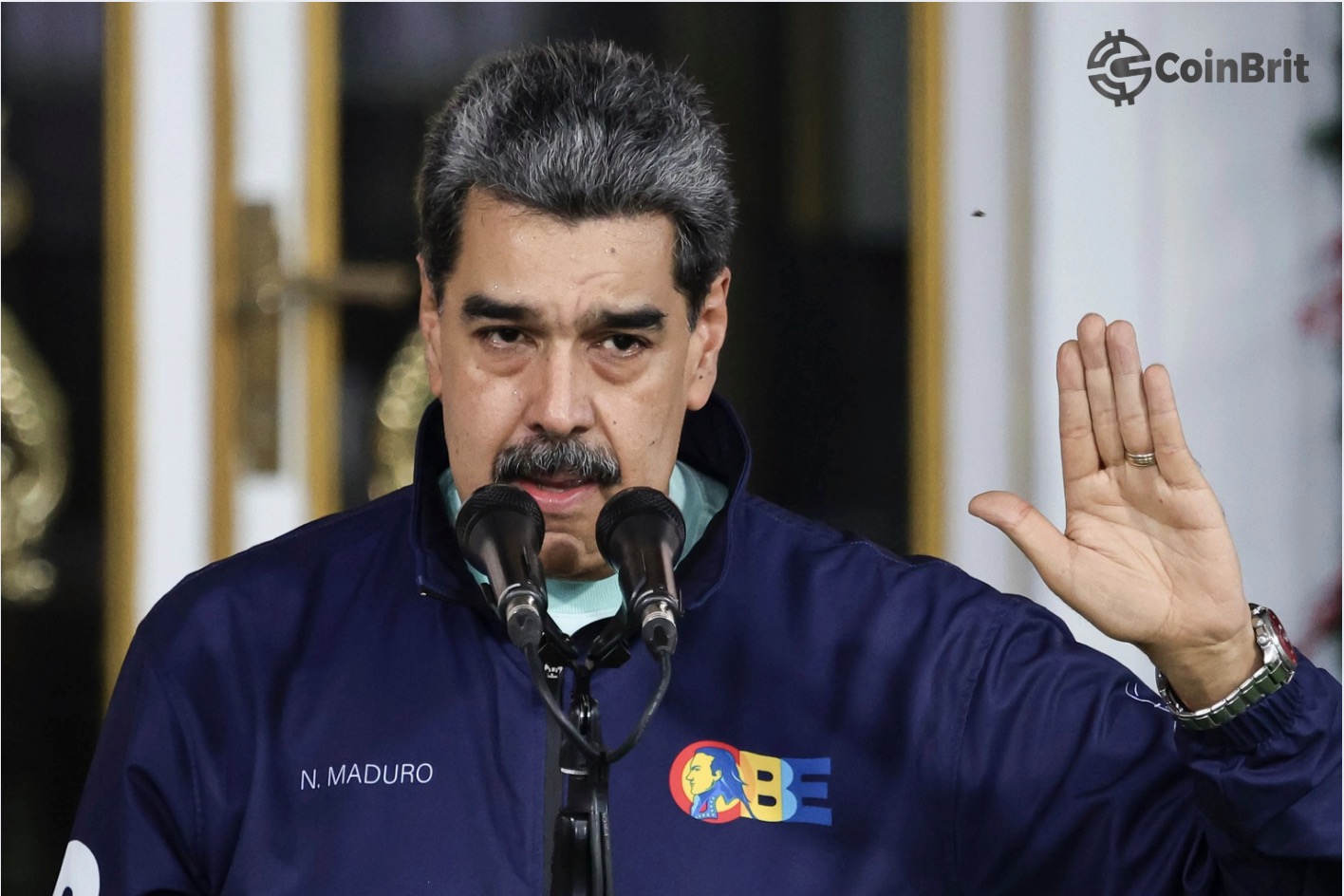
US Representative Ritchie Torres is set to introduce new legislation aimed at tightening oversight of political prediction markets, following controversy around a lucrative wager linked to the reported capture of Venezuelan President Nicolás Maduro. The proposed bill comes amid growing concern that government insiders could misuse confidential information to profit from event-based betting platforms.
Proposed Bill Targets Political Prediction Trading
The legislation, titled the Public Integrity in Financial Prediction Markets Act of 2026, would bar federal elected officials, political appointees and executive branch employees from trading on prediction market contracts tied to political outcomes or government actions when they possess nonpublic information gained through their official roles.
Punchbowl News founder Jake Sherman disclosed the plan in a post on X, citing a source familiar with the matter. According to Sherman, the restrictions would apply broadly to buying, selling or exchanging prediction market contracts on platforms operating in interstate commerce, provided those contracts are connected to government policy, decisions or political developments.
Torres’ proposal is modeled on insider trading rules that already govern traditional financial markets, but it would be one of the first efforts to explicitly extend those standards to the rapidly expanding prediction market sector.
A $32,000 Wager Sparks Scrutiny
The push for legislation follows intense scrutiny of a high-stakes bet placed on Polymarket earlier this month. A newly created account reportedly wagered around $32,000 on a contract predicting that Nicolás Maduro would be removed from power by January 31, 2026.

New trader wins big on Maduro’s arrest. Source: Joe Pompliano
Within hours, reports surfaced claiming that US forces had captured the Venezuelan leader, an event that sent the contract to settlement. The position ultimately generated more than $400,000 in profit for the trader, an unusually large return in a very short time frame.
The timing and scale of the trade immediately raised eyebrows. The account showed little prior activity, with the Maduro wager accounting for the overwhelming majority of its gains. This fueled speculation that the trader may have had access to sensitive political or military information before it became public.
Questions Around Insider Access and Enforcement
The incident has amplified long-standing debates about whether prediction markets are vulnerable to insider abuse, particularly when contracts are linked to geopolitical events or government actions. Unlike traditional stock markets, prediction platforms often operate in a regulatory gray area, even as they attract significant volumes and sophisticated participants.
In response to Sherman’s post about the proposed bill, Kalshi, another major prediction market platform, said its existing rules already prohibit insiders and decision-makers from trading on material nonpublic information. The company emphasized that it treats such violations seriously and has safeguards in place to detect misconduct.
Still, critics argue that self-regulation may not be enough as these platforms grow in influence and visibility. Torres’ bill would introduce statutory restrictions, giving regulators clearer authority to police insider behavior in this niche but fast-evolving market.
Polymarket Addresses Separate Security Concerns
At the same time, Polymarket has been dealing with a separate wave of criticism related to account security. Over the past week, several users reported that their accounts were compromised, with balances drained after a series of suspicious login attempts.
Affected users shared their experiences on Reddit and X, saying they noticed unauthorized access before their positions were closed and their funds reduced to nearly zero. Many claimed there was no evidence that their personal devices or other online accounts had been breached.
Polymarket later acknowledged the issue, stating that it had identified and fixed a security vulnerability introduced by a third-party authentication provider. The company said the problem affected only a small number of users, has been fully resolved and does not pose an ongoing risk. It also said impacted customers would be contacted directly.
A Broader Debate on Prediction Markets
Together, the Maduro wager controversy and the recent security issues have put prediction markets under a sharper spotlight. Supporters argue that these platforms provide valuable signals about public expectations and can enhance forecasting accuracy. Critics counter that without clearer rules, they risk becoming tools for speculation based on privileged information.
Torres’ proposed legislation signals that lawmakers are paying closer attention. If enacted, it could mark a significant shift in how political prediction markets are regulated in the United States, particularly for those with direct access to the levers of government power.
For now, the bill is still in preparation, but the debate it has sparked is likely to intensify as prediction markets continue to intersect with high-stakes political events.