
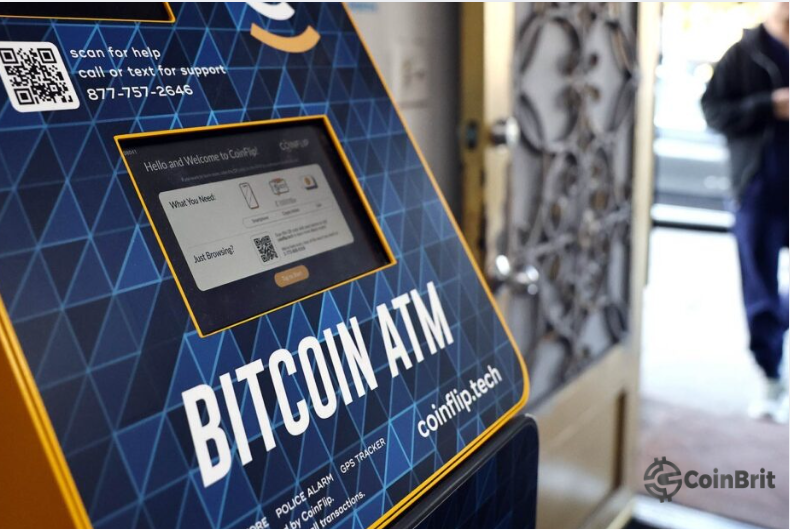
Cryptocurrency ATM fraud in the United States rose sharply in 2025, with losses reaching $333 million as scammers increasingly used artificial intelligence tools to trick victims, according to a new report from cybersecurity firm CertiK.
The report highlights how organized scam networks are using crypto ATMs as a quick and easy way to move stolen funds. Complaints recorded by the Federal Bureau of Investigation also surged during the year, reflecting the rapid expansion of this type of fraud.
Experts say the combination of fast transactions, limited identity verification and sophisticated social engineering tactics has made crypto kiosks one of the most attractive tools for scammers.
Complaints Rise as Losses Hit $333 Million
According to data cited by CertiK, the FBI received more than 12,000 complaints related to crypto ATM scams between January and November 2025. That represents a 33 percent increase compared with the previous year.
Financial losses linked to these scams reached $333 million during the same period. Investigators believe the actual number could be higher, as many cases go unreported.
Crypto ATMs allow users to convert cash into cryptocurrency within minutes. While the machines were originally designed to make digital assets more accessible, the report says scammers have exploited the system’s speed and relative anonymity.
CertiK described crypto kiosks as the “lowest-friction extraction channel” available to fraud networks because transactions can often be completed in under five minutes with minimal identity checks.
United States Hosts Majority of Crypto ATMs
The United States remains the largest market for crypto ATMs worldwide. CertiK estimates the country hosts about 78 percent of the world’s roughly 45,000 cryptocurrency machines.
The widespread availability of these kiosks has created opportunities for criminals who convince victims to deposit cash at a machine and send funds directly to wallets controlled by scammers.
Investigators face another challenge known as the “attribution gap.” Blockchain records only show the transfer from the ATM operator to the destination wallet, not the identity of the person who deposited the cash.

The five types of ATM fraud approaches. Source: CertiK
Because of this limitation, tracing victims or perpetrators often requires legal orders to obtain customer records from ATM operators.
Older Adults Most Frequently Targeted
The report shows that older Americans remain the most common targets of crypto ATM scams. Around 86 percent of reported losses involved victims aged 60 and above.
Researchers attribute this trend to several factors, including the likelihood that older adults have accessible savings, limited familiarity with cryptocurrency systems and greater vulnerability to social manipulation.
Many scams begin with phone calls or messages from people posing as government officials, technical support agents or bank representatives. Victims are often told their accounts have been compromised or that urgent action is required.
They are then instructed to withdraw cash and deposit it into a nearby crypto ATM, believing the payment will resolve the issue or secure their funds.
Common Scam Tactics Continue to Evolve
CertiK identified several common tactics used in crypto ATM fraud schemes.
One of the most prominent methods is the so called “pig butchering” scam, where criminals build long term relationships with victims online before persuading them to invest money in fake cryptocurrency opportunities.
Other common strategies include government impersonation scams, fraudulent tech support calls, “grandparent scams” where criminals pretend to be relatives in distress and fake services that promise to recover lost funds.
Unlike phishing attacks or wallet hacks that rely on technical vulnerabilities, ATM fraud typically depends on convincing victims to carry out the transaction themselves.
In these cases, the victim willingly deposits cash into the machine and sends cryptocurrency to an address provided by the scammer, making the funds difficult to recover.
AI Tools Accelerate Fraud Operations
Artificial intelligence is now playing a larger role in the expansion of crypto ATM scams.
CertiK found that AI assisted social engineering schemes were about 4.5 times more profitable than traditional scam methods in 2025.
One of the biggest concerns is the growing use of real time deepfake technology. Criminals can generate convincing audio or video messages that appear to come from trusted individuals such as family members, colleagues or government officials.
AI driven tools can also analyze a victim’s online presence and create highly personalized messages that mimic the language and behavior of someone they know.
According to the report, these capabilities make scams more convincing and significantly increase the chances that victims will comply with instructions.
Organized Crime Increasingly Involved
Another shift highlighted in the report is the growing involvement of large criminal networks in crypto ATM fraud.
Rather than isolated scammers working alone, many operations now resemble structured organizations with specialized teams handling different parts of the scheme.
Some groups focus on contacting and manipulating victims, while others manage cryptocurrency wallets, money laundering operations and technical infrastructure.
CertiK said these transnational criminal organizations are scaling ATM based fraud at an unprecedented level.
Lawmakers Push for New Regulations
Growing losses have drawn attention from US lawmakers who are seeking ways to protect consumers while allowing cryptocurrency innovation to continue.
In September, US Senator Cynthia Lummis said proposed legislation aimed at regulating the cryptocurrency market could help address ATM fraud by targeting bad actors without restricting the broader industry.
Earlier in February 2025, US Senator Dick Durbin introduced the Crypto ATM Fraud Prevention Act, which proposes stronger safeguards for users of crypto kiosks.
The bill seeks to introduce measures that could improve identity verification and provide clearer warnings to customers using the machines.
As cryptocurrency adoption grows, security experts warn that fraud methods are also becoming more sophisticated. Without stronger safeguards and increased public awareness, they say scams involving crypto ATMs could continue to rise.